Thursday, January 13, 2011

The Girl Who Kicked the Hornet's Nest (Millennium, #3)The Girl Who Kicked the Hornet's Nest by Stieg Larsson


I decided to read this as my next book because of "peer pressure" (Thanks Leslie!) But I'm actually happy to. The ending of the last book left me chomping at the bit to find out what happened to the main character.

I've found that every book in this series has started better than the last. With the first book, I thought I was going to need a pillow, until I got to page 125. This book starts off in the thick of things with good explanation of past events (not too in depth, but just enough to to know what's going on) so this book can also be read without reading the previous 2. It's certainly entertaining and I can't wait to dig into it.


View all my reviews
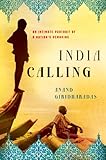
India CallingIndia Calling by Anand Giridharadas

My rating: 5 of 5 stars


Just finished this book and I thoroughly enjoyed it. While I found the descriptions and stories of Indian modern culture enlightening and amusing, I thought that the deeper themes of being born to immigrant parents; seeing the "mother country" as a myth described in stories told my parents; realizing that the stories told by your parents is not the present day culture (they're view is totally old school); and being the foreigner in your country of origin captivated my attention and engrossed me in this book. It's a great book and I highly recommend it! The writing pulls you in from the first page.


View all my reviews

Monday, November 22, 2010

Genghis Khan and the Making of the Modern Word

I'm in a Genghis Khan rut! But it's soooo incredibly interesting!!

Genghis Khan and the Making of the Modern World

About this book:
The name Genghis Khan often conjures the image of a relentless, bloodthirsty barbarian on horseback leading a ruthless band of nomadic warriors in the looting of the civilized world. But the surprising truth is that Genghis Khan was a visionary leader whose conquests joined backward Europe with the flourishing cultures of Asia to trigger a global awakening, an unprecedented explosion of technologies, trade, and ideas. In Genghis Khan and the Making of the Modern World, Jack Weatherford, the only Western scholar ever to be allowed into the Mongols’ “Great Taboo”—Genghis Khan’s homeland and forbidden burial site—tracks the astonishing story of Genghis Khan and his descendants, and their conquest and transformation of the world.

Fighting his way to power on the remote steppes of Mongolia, Genghis Khan developed revolutionary military strategies and weaponry that emphasized rapid attack and siege warfare, which he then brilliantly used to overwhelm opposing armies in Asia, break the back of the Islamic world, and render the armored knights of Europe obsolete. Under Genghis Khan, the Mongol army never numbered more than 100,000 warriors, yet it subjugated more lands and people in twenty-five years than the Romans conquered in four hundred. With an empire that stretched from Siberia to India, from Vietnam to Hungary, and from Korea to the Balkans, the Mongols dramatically redrew the map of the globe, connecting disparate kingdoms into a new world order.

But contrary to popular wisdom, Weatherford reveals that the Mongols were not just masters of conquest, but possessed a genius for progressive and benevolent rule. On every level and from any perspective, the scale and scope
of Genghis Khan’s accomplishments challenge the limits of imagination. Genghis Khan was an innovative leader, the first ruler in many conquered countries to put the power of law above his own power, encourage religious freedom, create public schools, grant diplomatic immunity, abolish torture, and institute free trade. The trade routes he created became lucrative pathways for commerce, but also for ideas, technologies, and expertise that transformed the way people lived. The Mongols introduced the first international paper currency and postal system and developed and spread revolutionary technologies like printing, the cannon, compass, and abacus. They took local foods and products like lemons, carrots, noodles, tea, rugs, playing cards, and pants and turned them into staples of life around the world. The Mongols were the architects of a new way of life at a pivotal time in history.

In Genghis Khan and the Making of the Modern World, Jack Weatherford resurrects the true history of Genghis Khan, from the story of his relentless rise through Mongol tribal culture to the waging of his devastatingly successful wars and the explosion of civilization that the Mongol Empire unleashed. This dazzling work of revisionist history doesn’t just paint an unprecedented portrait of a great leader and his legacy, but challenges us to reconsider how the modern world was made.

Thursday, November 18, 2010

Genghis: Birth of an Empire

Genghis: Birth of an Empire (Conqueror, #1)

Book type: Historical Fiction (my fav these days)

Just started reading and the prose is delightful. Can't wait to delve deeper into this one!

The Clan of the Cave Bear

The Clan of the Cave Bear (Earth's Children, #1)

Well, I just finished reading this book. I never read this book when it was originally published back in the 80's. I've always wondered what the fuss was about.

As I read the book and got into the characters and overall theme, for some reason the overall symbolic anthropological argument of this book is pissing me off...I think it has to do with the super intelligent main character being blond and blue-eyed juxtaposed against the indigenous dark-skinned community (no offense intended to my blond, blue-eyed friends!)... perhaps I'm just being ultra-sensitive?... any comments?

In any case, I'm done reading this book if anyone wants to borrow it. I have to say that the story was ok, as soap operas go. I found my liberal feminist sensibilities roused at the end. Not enough to put the sequel on my "must-read" list though.

I give it 2 out of 5 stars...I think the average rating was 3.2 (which really makes me wonder how it got to be on the NY Times best seller list back in the day).

Wednesday, November 3, 2010

Figures in Silk

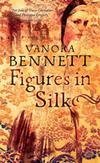
Figures in SilkFigures in Silk by Vanora Bennett

My rating: 5 of 5 stars


I enjoyed this story. Although I tend to think of the position of women in England in the 1400's as limited, this story tells the tale of a woman who works hard to find power within the defined roles for women and class. Very good read.


View all my reviews

Saturday, October 30, 2010

Cleopatra's Daughter

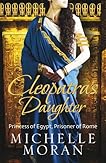
Cleopatras Daughter

I just finished reading this book. I thought my reaction to it was weird. I thought that throughout the book I was more interested in the historical fact, but the end had this rush of emotion... Climactic? Hmmm...it was so short-lived. All the action happened in about 20 pages.

I'd categorize this book as light reading...it's not that heavy in historical fact droppings, although historical Rome was very accurate.